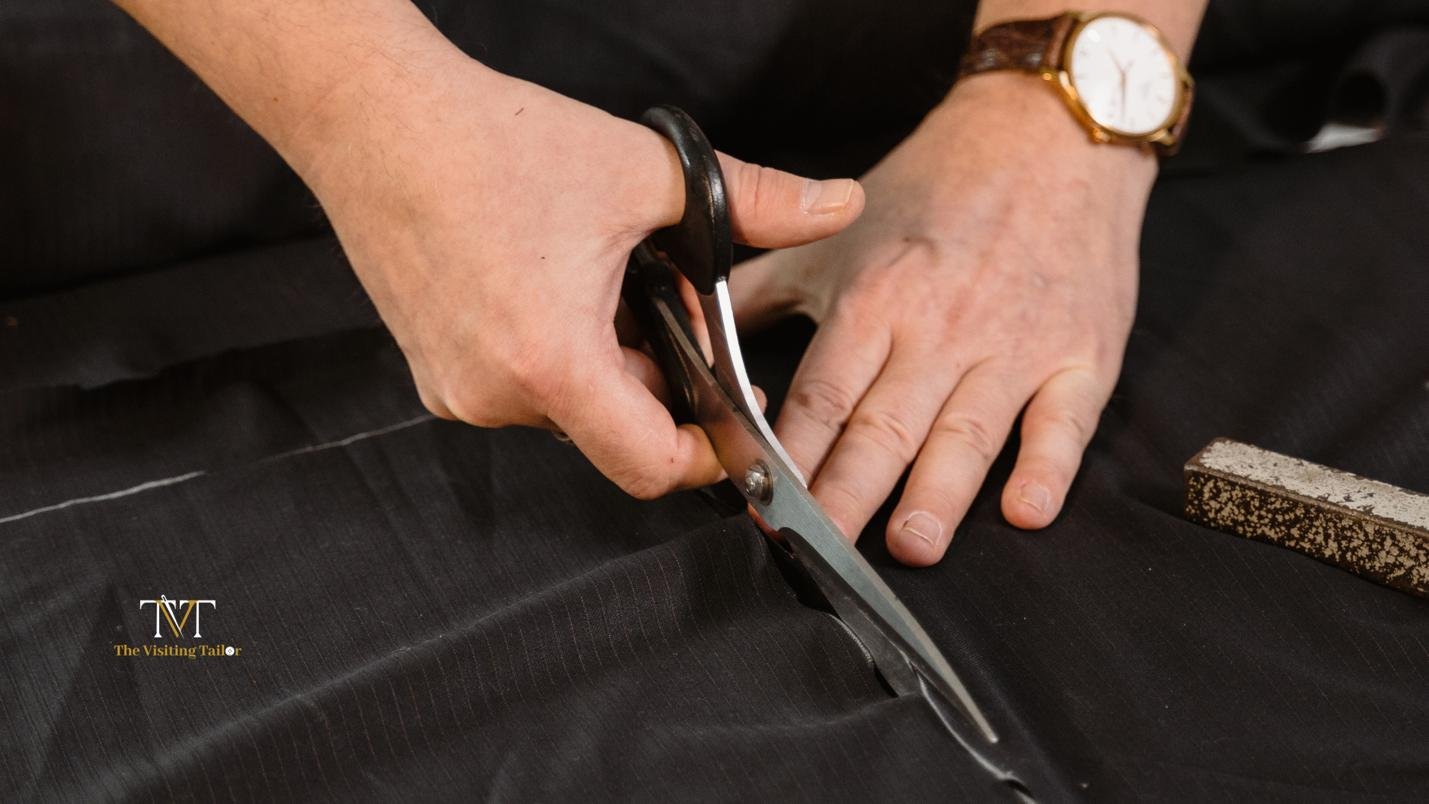
Before beginning any care routine, it is worth understanding the materials in your garment. Fabrics commonly found in bespoke suits — wool, cashmere, and their blends — each have unique characteristics in terms of breathability, durability, and maintenance requirements. Understanding these properties will guide your approach to care throughout the year.
As a general principle: natural fibres breathe and recover. The key to long-term care is working with those properties — never forcing, never over-cleaning, and always allowing the garment to rest and restore between wears.
Use a good-quality clothes brush — ideally horsehair — to remove surface dust and debris immediately after wearing. Brush in downward strokes, following the direction of the cloth's grain. This removes particles before they work into the fibres, extending the life of the fabric significantly.
After wearing, hang your suit on a quality wooden hanger and allow it to air for at least an hour — ideally overnight — before returning it to the wardrobe. This allows moisture absorbed during wear to evaporate and the cloth to recover its shape naturally. Never store a suit immediately after wearing.
A handheld garment steamer is among the most valuable tools for maintaining a bespoke suit. Steaming removes light creases and refreshes the cloth without the direct heat pressure of an iron, which can flatten the weave and cause irreversible shine on worsted wool. Use steam gently, at a distance, and allow the suit to hang dry after.
If your suit develops odours, hang it in a well-ventilated area or use a fabric refresher spray designed for delicate cloth. Avoid strong fragrances or aerosol sprays directly on the fabric. Cedar blocks in the wardrobe offer a natural and effective deterrent for both odour and moth.
Always use a broad-shouldered, well-contoured wooden hanger. This preserves the shape of the jacket shoulder — the most structurally significant part of the garment — and prevents the shoulder dimples that form when suits are hung on wire or narrow hangers for extended periods.
When storing for extended periods, use a breathable fabric garment bag rather than plastic. Plastic traps moisture and promotes mildew — the enemy of fine cloth. A breathable bag protects from dust and light while allowing natural ventilation to continue.
Rotating your suits — never wearing the same suit on consecutive days — allows the cloth to fully rest and the canvas construction to recover. A suit worn every day will show wear significantly faster than one rotated across a wardrobe of three or more.
The most important principle of cleaning a bespoke suit is restraint. Dry cleaning, while occasionally necessary, uses chemicals that degrade the canvas and natural fibres over time. A well-cared-for suit — brushed and aired consistently — may only need dry cleaning once or twice per year at most.
For spot stains, act quickly and gently. Blot — never rub — to prevent the stain spreading into the weave. Talcum powder applied to a fresh oil stain will absorb much of the grease before it sets. For water-based stains, a gentle dab with cool water and patience is usually sufficient. When in doubt, take it to a specialist — a trusted dry cleaner who understands bespoke garments is invaluable.
A few well-chosen tools make a significant difference to the long-term condition of a bespoke suit. A quality horsehair clothes brush, a handheld steamer, broad wooden hangers, breathable garment bags, and cedar blocks are the foundation of an effective care routine. These are modest investments relative to the value of the garments they protect.
A well-cared-for suit does not simply survive the years — it improves with them. The cloth softens and moulds gently to the body, the canvas settles into its form, and the garment acquires a character that is entirely its own. That is the reward of care done properly — and the true measure of a bespoke suit’s worth.